

From 1998 to 2017, earthquakes have caused nearly 750,000 deaths globally more than other natural disasters as cited in World Health Organisation (WHO) report on earthquakes. This makes an earthquake a serious natural disaster, hence, it needs a conversation.
According to WHO, an earthquake is “a violent and abrupt shaking of the ground caused by movement between tectonic plates along a fault line in the earth’s crust”. In simple terms, an earthquake is a sudden rapid shaking of the earth which may be a result of the breaking and shifting of subterranean rock.
Initially, the shaking is mild then may strengthen and become extremely powerful within moments. Determining the extent of destruction and harm due to the earthquake relies on magnitude, intensity, and duration, the local geology, and the time of day the earthquake happens. As one of the earthquake health safety tips, one needs to be informed by getting to know countries or areas prone to earthquakes although every place is at risk. Cited in the world atlas.com include the greatly 15 countries prone to earthquakes such as Japan, Indonesia, China, Philippines, Iran, Turkey, Peru, USA, Italy, Mexico, Nepal, Pakistan, Bangladesh, Ecuador, and Guatemala. This is not to say earthquakes cannot happen in other nations apart from these earthquake-prone countries listed by World Atlas.
Also, getting informed means receiving alerts, and public safety information, and creating and reviewing your family emergency plan such as identifying safe places to take cover (hide under a sturdy piece of furniture or table and cover the head and neck with your arms), fastening all bookshelves, hutches, and freestanding shelving to walls, placing large, heavy objects as well as fragile objects on lower shelves, and figuring out where your electricity, gas, and water switches and valves are located and how to shut them off. Furthermore, it’s important to make a record of your property by taking photos or videos of your belongings and storing these records in a safe place.
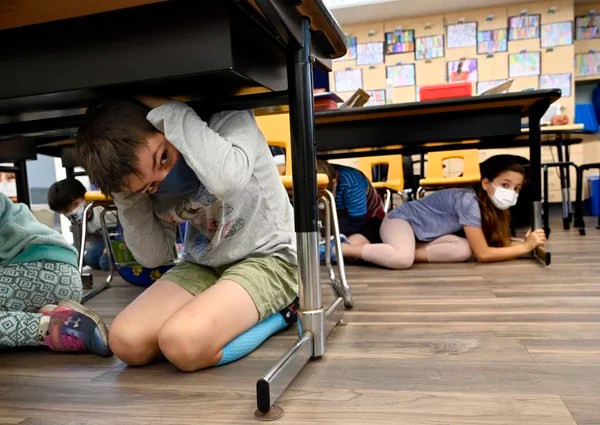
In preparedness for earthquakes, we need to practice how to Drop, Cover and Hold on so that during the earthquake, you can use these skills to protect yourself.
DURING THE EARTHQUAKE
If you are inside…..
1. Stay inside and be calm. Do not get in a doorway…this does not protect you from falling or flying objects.
2. Drop, Cover and Hold on.
Drop down to the ground so the earthquake doesn’t knock you down.
Cover your head and neck with your arms to protect you from falling objects. Hide under a sturdy table or desk, and if there is no shelter nearby, get down near an interior wall or next to low-lying furniture that won’t fall on you, and cover your head and neck with your arms and hands. Stay away from glass, windows, outside doors, and other items that could fall.
Hold on to your shelter or your head and neck until the shaking stops. Be prepared to move with your shelter if the shaking shifts it around.
If you are in the kitchen…..quickly turn off the stove and take cover at the first sign of shaking.
If you’re in bed…..hold on and stay there, protect your head with a pillow. You’re less likely to be injured staying where you are.
If you’re in a high-rise building……drop, cover, and hold on. Move away from windows and outside walls. Stay in the building. Do not use the elevators. The electricity may go out. If you’re trapped, stay calm. Try to get someone’s attention by tapping on hard surfaces to increase your chances of being rescued.
If you’re in a stadium or theatre….stay in your seat and protect your head and neck with your arms. Do not leave until the shaking is over.
If you’re near the shore…..drop, cover, and hold on until the shaking stops. If you cannot drop to the ground, endeavor to sit or remain seated so you’re not knocked down.
If you’re in a vehicle…..pull to the side of the road and stay inside until the earthquake is over. Do not stop under overpasses or power lines. Turn on the radio for emergency broadcast information.

AFTER THE EARTHQUAKE
Continue to monitor media for emergency information. Follow instructions from public safety officials.
If you’re trapped, try calling or texting, or tapping hard surfaces for help. You can also tap on a pipe or use a whistle if close to you to help rescuers locate you.
Stay out of damaged buildings and areas until authorities deem there safe. Check your home for damage such as a gas leak then go outdoors immediately and do not turn on electrical switches or appliances on or off.
If your home or property is damaged, take photos or videos to document your damage and contact your insurance company.
If phone lines are down, use social media or text to let others know you are safe. Be a good neighbor, especially the elderly, those who live alone, and those with medical conditions.
Credits:
https://www.mass.gov/info-details/earthquake
https://www.who.int/health-topics/earthquakes
https://www.cdc.gov/disasters/earthquakes
https://www.worldatlas.com/articles/the-world-s-10-most-earthquake-prone-countries.html
 Kwasi Omaro