Due to pervasive misconceptions, ignorance, violence and discrimination against people with albinism, United Nations’ General Assembly adopted resolution establishing June 13th as International Albinism Awareness Day (IAAD). This awareness will facilitate the albinism advocacy.
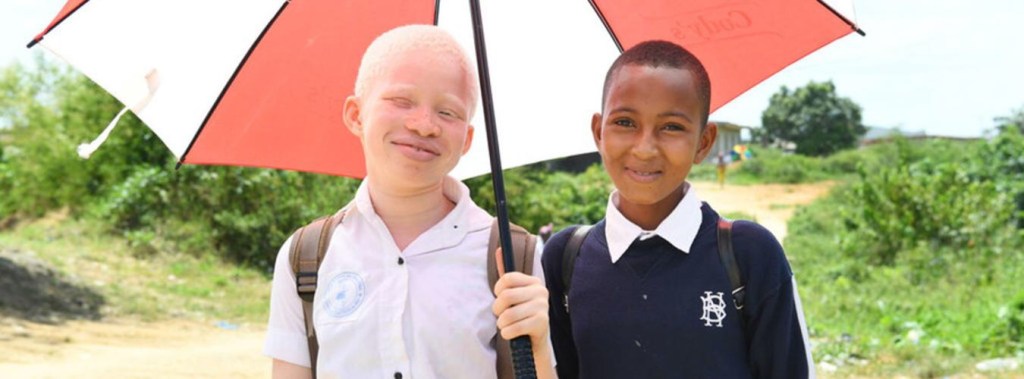
The theme for this year’s awareness creation is Strength Beyond All Odds. As the UN Secretary General, Antonio Guterres said
There is deep need to demystify the condition and end discrimination.
It is therefore important to have the deeper understanding of this condition, Albinism and also advocate for people with such condition to be accepted and loved. This leads us to what Albinism is.
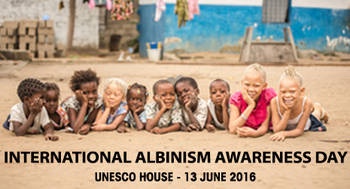
Albinism is an autosomal recessive disorder notably causing a deficiency in production of melanin. In other words, one gets this condition when one inherits a mutated gene from parents which reduces the amount of melanin pigment. This melanin pigment gives the colour of the skin, hair and/or eyes. Albinism occurs in all racial and ethnic groups. Most children with albinism are born to parents who have normal hair and eye colour for their ethnic backgrounds. One may now ask why the child with albinism? This is because the parents have the mutated gene which is hidden, and this is what the medical fraternity termed as recessive. And this has been inherited by the child but not that the child bought the condition from somewhere or is an evil child. Usually, if a family has a recessive mutated gene, definitely one of the children will have albinism.
The cause is mutated gene. As said earlier that the melanin pigment gives the colour of the skin, hairs and eyes, the melanin also plays role in the development of optic nerves. This explains why people with albinism have light-coloured skin which can range from white to brown, white to brown hair, very light blue to brown eyelashes and eyebrows. All these lead to vision problems, rapid involuntary back- and -forth movement of the eyes (nystagmus), head movements like tilting the head to try to reduce the involuntary eye movements and see better, and inability of both eyes to stay directed at the same point or move in unison (strabismus).
Others too are sensitive to light (photophobia), astigmatism(abnormal curvature if front surface of the eye leading to blurred vision. Some people can see near objects clearly but not far objects (nearsightedness) while others can see far objects clearly but not near objects (farsightedness). Mostly, people with albinism have poor development of their retina which affects vision.
It is also noted that when people with albinism are exposed to sun, some may develop freckles or moles with or without pigment. The moles without pigment are pink-coloured. The Freckle may be large spots-like. Also, some people may experience sun burn and inability to tan.
There are so many types of albinism. The most common type is Oculocutaneous where one inherits two copies of the mutated genes from each parent. The other types include ocular albinism which’s limited to eyes and occurs exclusively in males. Additionally, there are albinism related to rare hereditary syndromes such as Hermansky-Pudlak Syndrome where one has bleeding and bruising problems, including lung and bowel disease but those with Chediak-Higashi Syndrome have immune problems with recurrent infections and others. Kindly consult your doctor immediately if you experience these issues.
Moving forward, let tell a friend to tell a friend that albinism Is never evil or spiritual but genetic condition which is inherited from parents. People with Albinism is not their making to be born like that hence, they need acceptance, love, equal opportunity to education, work and others. Let empathise with them and respect their human rights.
To provide equal learning environment at school for people with albinism, we can give the front seat to them, textbooks should have large high-contrast text print. Addendum; font size can be increased on computer and light for learning should be dim since they’re sensitive to light.
People with albinism should wear long sleeves when there is risk of exposure to sun. If possible avoid exposure to sun or avoid prolonged exposure to sun. Wearing of dark lens when exposed to sun is encouraged. Peer group support or online organisational support like National Organisation for Albinism & Hypopigmentation (NOAH) is very important. Let use everyone opportunity we get to advocate for people with albinism because they deserve love and acceptance: they did not buy albinism but their parents gave it to them. Thanks for reading and sharing.
Credit;
National Organization for Albinism and Hypopigmentation
 Kwasi Omaro