
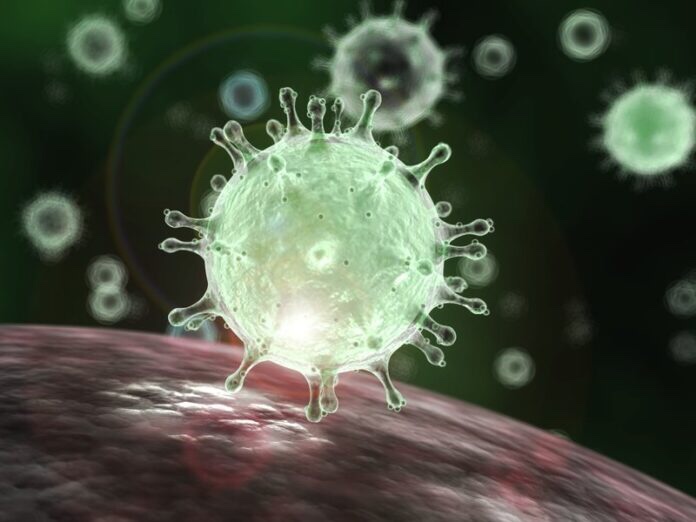
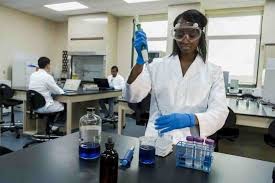
As the world battles with Covid-19, the World Health Organization (WHO) strongly suggested that all countries take bold initiatives to “test, test and test” to identify cases. This call by the WHO was based of the fact that an effective way of controlling infectious diseases is to identify the reservoir host and isolate them from the general population. In fact, essential among the WHO’s key strategies in the fight againist infectious diseases is having proper National Laboratory Systems and infrastructure.
Unfortunately, at the wake of Covid-19, the Ghanaian Laboratory Systems were not that prepared to respond to the WHO’s call to test citizens. Deploying Medical Laboratory Professionals (MLPs) in the country has become difficult for some time now with many professionals remaining unemployed. One major reason to this is that government over the years has neglected some aspects of healthcare including medical laboratory sciences.
This conspicuous neglect of laboratory systems has resulted in the Center for Disease Control of the United States of America to sacrifice millions of dollars in gathering experts to draw a technical laboratory plan for Ghana leading to the development of three important documents as policy frameworks for the development of medical laboratory science in Ghana. One of these key policy frameworks is the National Health Laboratory Policy (NHLP) – a policy document approved and signed in 2013 by the then Minister of Health, Hon. Sherry Ayitey, and was due for implementation. But due to health politics and medical supremacism, this policy has not seen the light of day even till today.
Foreseeing the dangers ahead such as this Covid-19 times, MLPs over the years have called upon both past and present governments to see to the implementation of the NHLP – a clarion call that even led to professionals laying down their tools in protest of failure of government to pay heed to their call. All the advocacy towards the implementation of the NHLP notwithstanding, it remains pathetic that the Ministry of Health could not awake to the need of this important sector of health till this pandemic.
Unfortunately, Covid-19 came in handy to expose the gaps in our medical laboratory systems as a country, and further confirms that the benevolence of the CDC towards aiding the development of laboratory policies for Ghana was not a waste of resources. The only difficulty we have is that, the sick who is to take medicine for his health fails to recognize that he is sick. CDC only came in to help. However, our leaders and ministries have refused to see the actual problem.
The fortunate aspect of Covid 19 pandemic is that it provides us as a country, a good opportunity to solve the problems we have ignored over the years: to develop proper medical laboratory systems including infrastructure, and to advance and train competent medical laboratory Scientists to man our laboratories. These are the main objectives of the NHLP.
Few days ago, Ghana only relied on two major research institutions – the Noguchi Memorial Institute of Medical Research of the University of Ghana and the Kumasi Center for Collaborative Research of the Kwame Nkrumah University of Science and Technology to test and confirm cases of Covid-19. Currently added is the National Public Health Reference Laboratory located at Korle Bu. These facilities remain inadequate to effectively response to the pandemic. The question is: could we have responded better if we had enough medical laboratory systems distributed in the country to test and confirm Covid-19 cases? The obvious answer is ‘yes’.
Building on this, challenges with the current regime of test includes delay in results, effects on sample stability as they are transported across long distances, and mounting of undue pressure on the testing facilities and the MLPs in these centres. It is important to note that when pressure builds on medical laboratories due to inadequate capacities, there abounds increase in the rate of false negative and false positive test results. These present challenges among several others have significant potential to affect our fight against Covid-19. However,it is never late as a country to plan well towards the uncertain future.
What is the future? The future is taking a deliberate look at the weak links in the health care system and fixing them. The future is the implementation of the NHLP and a conscious effort to develop competent and a well motivated workforce to man our medical laboratories taking into consideration current trends in professional development and ever changing technology. The future lies in empowering MLPs and further recognising their important roles in modern healthcare.
It is hopeful that our dear country Ghana and the entire African continent will see this future and embrace it. It is a truism that countries that have functional medical laboratory structures have a better chance of tackling both communicable and non-communicable diseases. It is also true that countries with effective regulatory regime and a formal policy on laboratory sciences continue to have robust medical laboratory systems. Examples of these countries in Africa include South Africa, Kenya, Ethiopia and Nambia. Surely, the time is now to move beyond supremacism and embrace systems where every team member is well recognized and given the chance to develop and contribute to the care of patients. That is the way to go.
God bless our homeland Ghana and give us the serenity to accept what cannot be changed, the courage to change what ought to be altered, and the wisdom to know the difference between the two.
-Written by ; Solomon D.Y KWASHIE, Medical Laboratory Scientist.
 Kwasi Omaro