Cited in GBC news channel yesterday (24/02/2020), both evening (7pm) and late news (10pm) was 30 cases of meningitis recorded, 4 deaths in the Central region, specifically Assin, Ghana, which was confirmed by Dr. Godfred Sarpong, The Director of Public Health, Central Region according to GBC news.
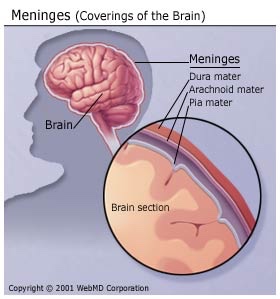
Meningitis is the inflammation (swelling) of the meninges (membranes) surrounding the brain and spinal cord. There are different types of meningitis, and these are; Bacterial meningitis, Viral meningitis and fungal meningitis.
The Bacterial meningitis is the most serious and can be deadly if not detected early and treated early. The viral meningitis is the most common cause while the fungal meningitis is very rare.
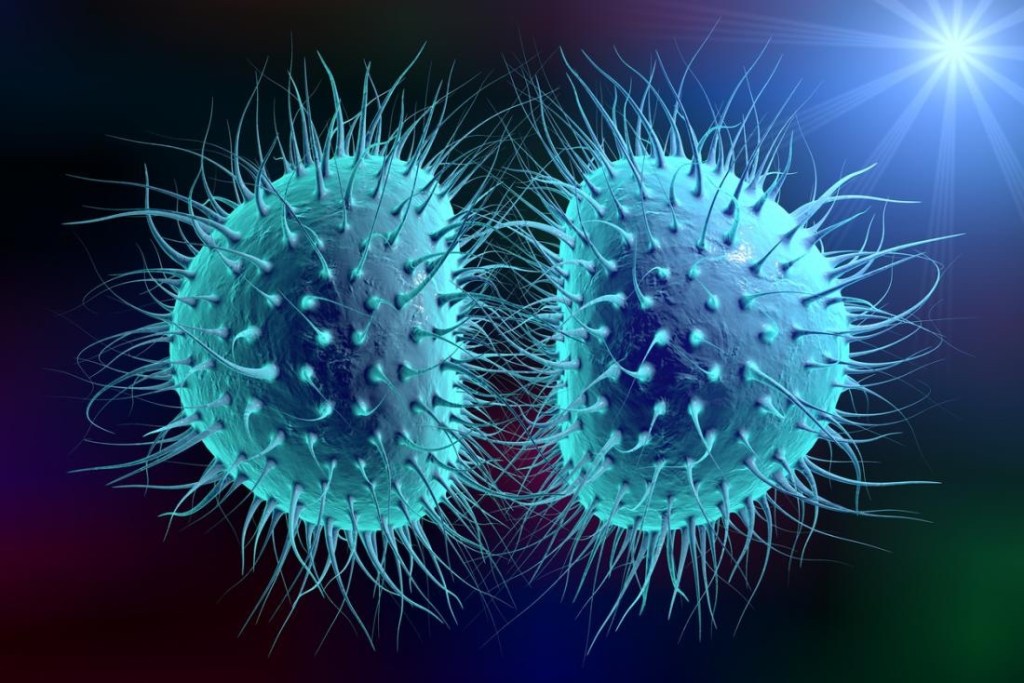
PhotoCredit; medicalnewstoday.com
SOME KEY FACTS ABOUT MENINGITIS.
1. Bacterial meningitis can be deadly as little as few hours after exposure.
2. Early detection and early treatment help to recover from meningitis.
3. If diagnosed early and adequate treatment started, 8%-15% of patients die, often within 24hrs-48hrs after the onset of symptoms (WHO facts sheet, 2018).
4. 50% cases of meningitis are fatal(deadly), and 10%-20% survivors can have complications such as brain damage, hearing loss or disability (WHO facts sheet, 2018).
5. This disease is common in the Sub-Sahara African especially in the dry season, stretching from Senegal in the West to Ethiopia in the East (WHO facts sheet, 2018).
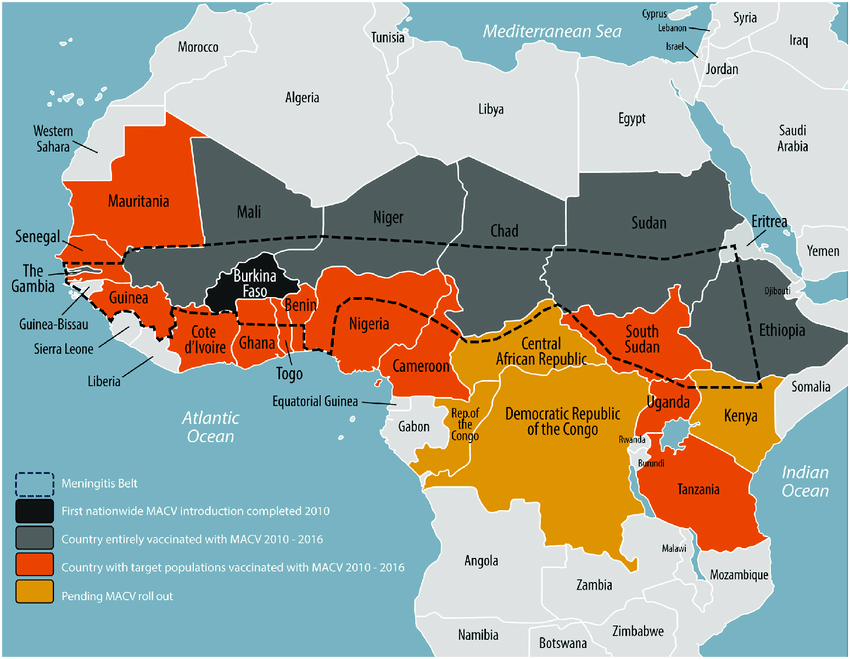
PhotoCredit: researchgate.net
6. Around 30,000 cases are still reported each year from these tropical regions (WHO facts sheet, 2018).
How Is This Disease Spread?
Through coughing, sneezing, kissing, sharing of eating utensils, toiletries, cigarettes with infected person especially the bacterial and viral meningitis. Some are carriers ( have the disease) without being sick can infect others.
Signs and Symptoms
When one is exposed to the disease, within 2-10days, the infected person may experience early symptoms such as fever, headaches, and stiff neck.
Late signs and symptoms are nausea and vomiting, sensitivity to light( photophobia), loss of appetite, difficulty concentrating, seizures, skin rash, confusion and others.
In children, they poorly feed, become irritated, cry a lot with stiff body and neck, Bulging fontanelle (soft spot on top of the baby’s head).
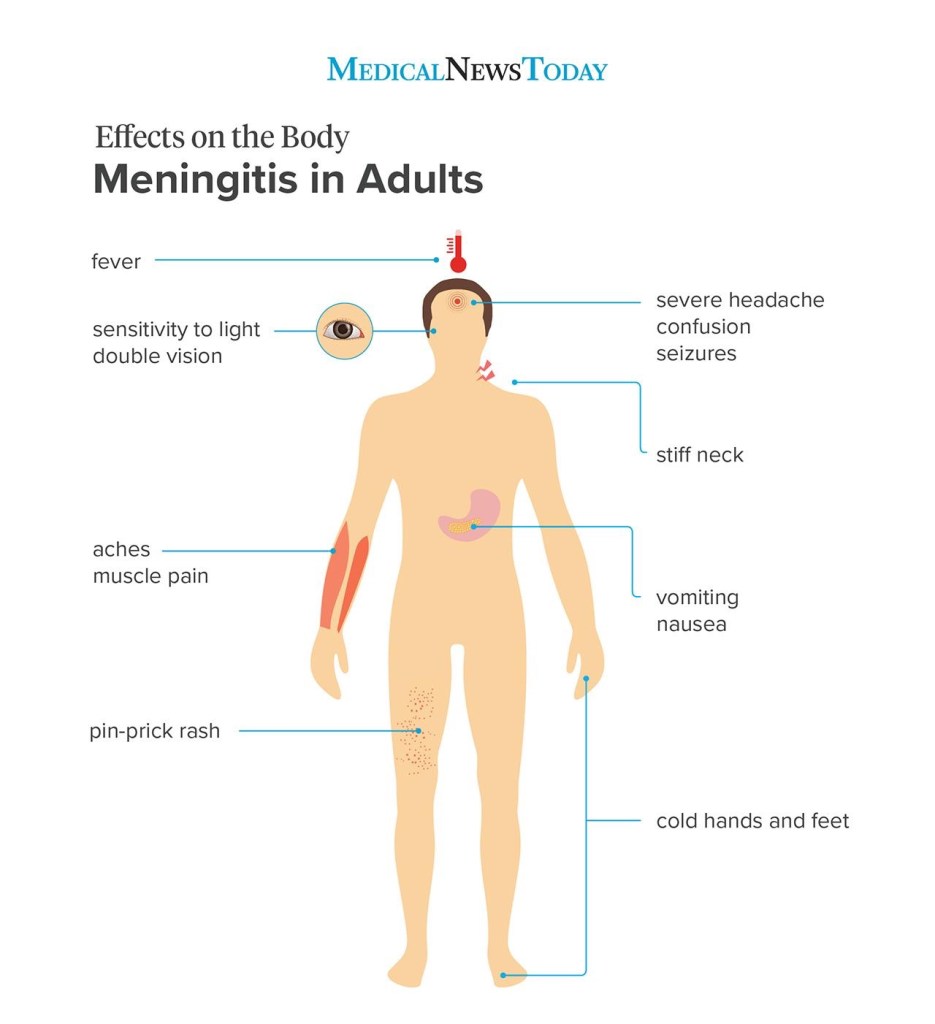
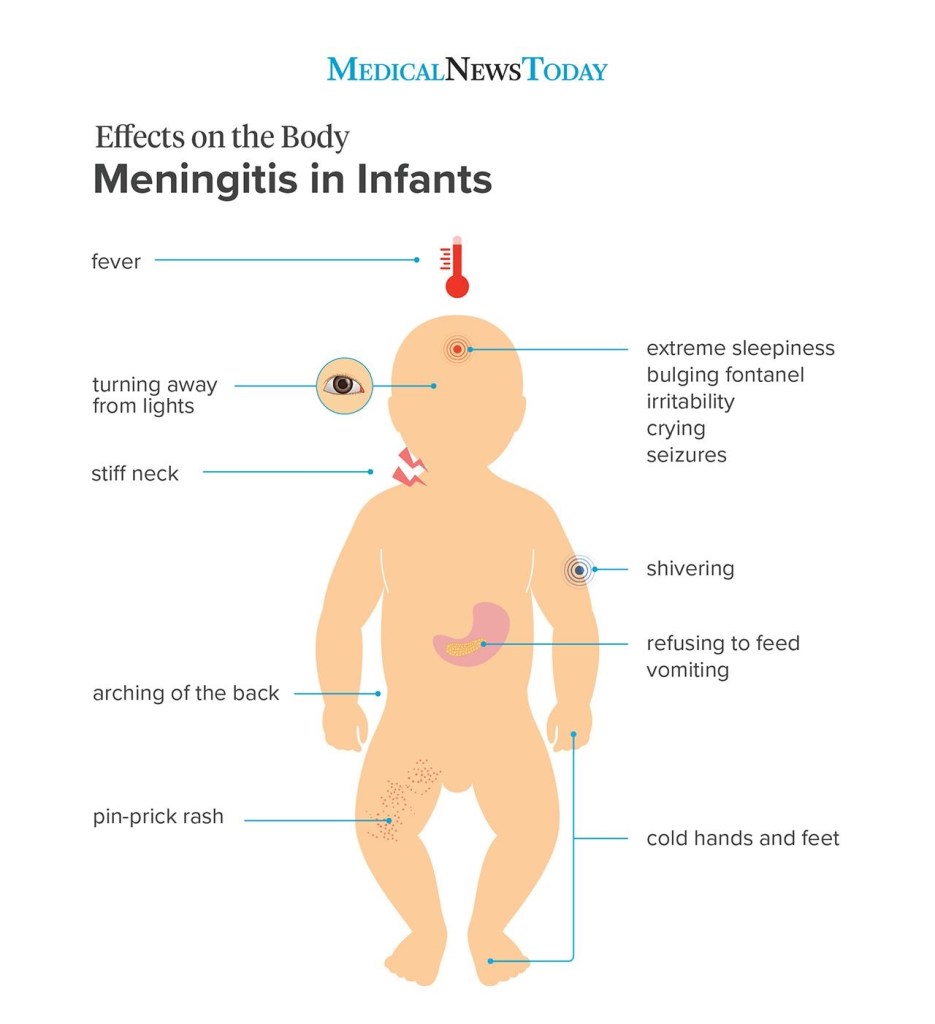
Blood sample can be taken for laboratory investigation as well as Lumbar Puncture( fluid near the spinal cord is taken from above the waist region) to confirm the disease apart from the signs and symptoms.
Treatment.
Antibiotics is the way to go.
People At Risk.
1. People skipping vaccinations: Those who could not complete recommended vaccinations.
2. Age; those under 20years.
3. Living in a community or group setting; people in overcrowded areas; students in dormitories, personnel at military bases, boarding school and others.
4. Pregnant women
5. Compromised immune system like AIDS, Alcoholism, diabetes, use of immunosuppressant drugs.
6. Working with meningitis-causing pathogen (microbiologist routinely exposed to meningitis causing bacteria).
7. Travel to certain places where the disease is common such as Sub-Sahara Africa during dry season, Mecca during Annual Hajj and Umrah pilgrimage.
HOW TO PREVENT MENINGITIS.
1. Wash hands regularly with soap under running water/ alcohol hand rub.
2. Avoid overcrowded public places.
3. Practise good hygiene; don’t share drinks, food, straws, eating utensils, lip balms or toothbrushes. Teach children and teen to avoid sharing these items.
4. Practise respiratory hygiene; cover mouth and nostril with clean tissue when sneezing or coughing and discard into bin, and wash hands/ rub with alcohol.
5. Maintain your immune system through adequate rest, exercise, adequate fruits and vegetables intake and others.
6. Cook meat thoroughly, and avoid unpasteurized cheeses( take cheeses labeled as being made with pasteurized milk).
7. Routine immunization is recommended.
Note; when there is outbreak; prompt reactive vaccination is advised.
It can be concluded that Meningitis especially the bacterial one can be deadly but early detection and early treatment save lives. Washing hands regularly, avoiding overcrowded places, and abstaining from sharing items can help prevent the disease. Let all live alive.
Sources.
1. GBC News, Evening and late news; 24/02/2020.
2. https://www.mayoclinic.org>such-2…


 Kwasi Omaro
Keep updating us as far our health is concerned. I do appreciate your effort,.. May Allah bless u with the insight to update us with more health tips.
LikeLiked by 1 person
Amen. Thanks
LikeLike
Bro thnx for the updates.
LikeLiked by 1 person
thanks for updating us on issues like this. i really appreciate ur effort. May God bless u nd give you more wisdom
LikeLiked by 1 person
Amen. Thanks
LikeLike