
Introduction.
PhotoCredit; www.wedmd.com
Cervical cancer is the fourth most frequent cancer in women with an estimated 570,000 new cases in 2018 representing 6.6% of all female cancers, and nearly, 90% of deaths from cervical cancer occurred in low- and middle-income countries (www.who.int).
According to World Health Organisation (WHO), nearly 68,000 cases of cervical cancer each year in Africa are caused by Human Papilloma Virus (HPV). Cervical cancer is a preventable disease but still the most common cause of cancer in the Africa, accounting 22% of all female cancers. 34 out of every 100,000 women in Africa are diagnosed with cervical cancer while 7 out of every 100,000 women are being diagnosed with cervical cancer in the North America. In Africa, 23 out of every 100,000 women die from cervical cancer every year but 3 out of every 100,000 women die from the disease every year in North America (www.afro.who.int).
Report sighted in the Human Papillomavirus and Related Cancers, Fact Sheet 2018, 3,151 women are diagnosed with cervical cancer while 2,119 women die from the disease every year in Ghana, hence, cervical cancer ranked as the second most frequent cancer among women between 15 and 44 years of age in Ghana (www.hpvcentre.net). These statistics showed that the disease can be deadly, hence, must give serious attention to this disease. It is therefore necessary to check your status at a nearby health facility.
This made the United State Congress to set January as the month for cervical health awareness month to educate and inform to promote preventive health (www.nccc-online.org). Therefore, every January is celebrated as cervical health awareness month.
What is Cervical Cancer, what is the cause, how is this disease transmitted and what are the parameters to determine if you have this disease?
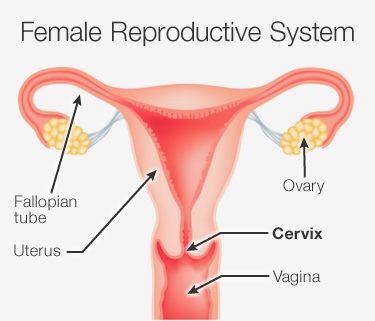
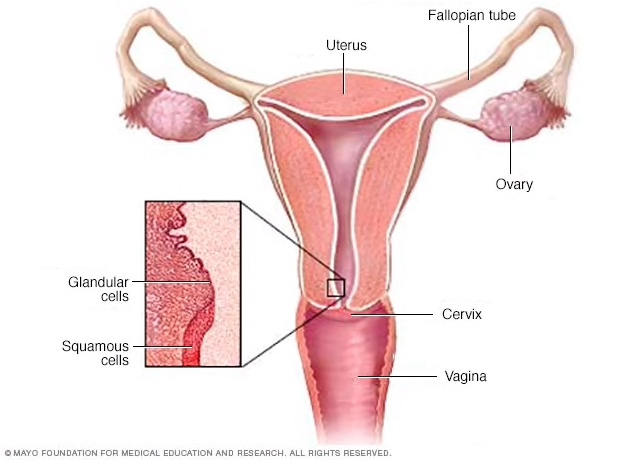
Cancer can be explained as a disease in which body cells grow uncontrollable. Cancer is always named after the part of the body it starts. When the cancer starts in the cervix, it is known as cervical cancer. The cervix is the lower, narrow end of the uterus which connects the vagina to the upper part of the womb (uterus)(www.insideknowledge2018cervicalcancerfactsheet.com
PhotoCredit; www.mayoclinc.org
The main cause of cervical cancer is Human Papillomavirus(HPV). HPV is the most common sexually transmitted infection (STI). One can get the HPV through sexual intercourse (oral, vaginal or anal sex) with infected partner but mostly spread through vaginal or anal sex. Infected person can pass the HPV even if the person has no signs or symptoms. Anyone who is sexually active can get HPV, even if you had sex with only one partner. Most infected people do not show signs and symptoms years after having sex with someone who is infected. This explains why it is very important to check your status by walking to any nearby centre for screening (www.cdc.gov).
When the cervical cancer advances, you may experience symptoms such as vaginal bleeding or vaginal abnormal discharge (bad odour), and bleeding after sex (www.insideknowledge2018cervicalcancerfactsheet.com).
Please, do not wait to experience these but go for screening to know your status because early detection saves life.
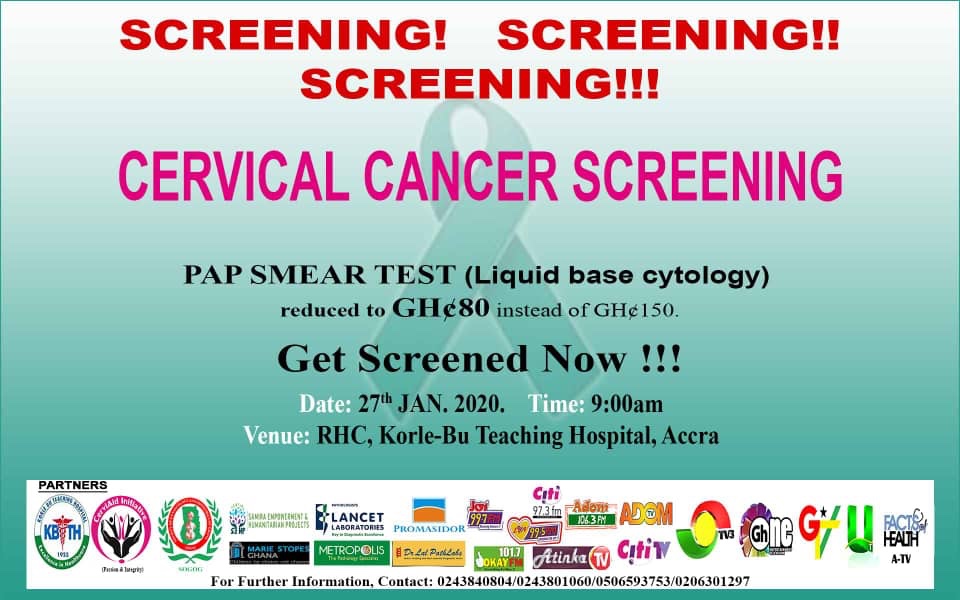
Get Pap smear test done at any hospital to know your cervical health status. Korle-Bu Teaching Hospital-Reproductive Centre will start cervical cancer screening on 27th January, 2020 at 9am at a subsidised cost (Ghc 80 instead of Ghc150). Get screened now to save your life.
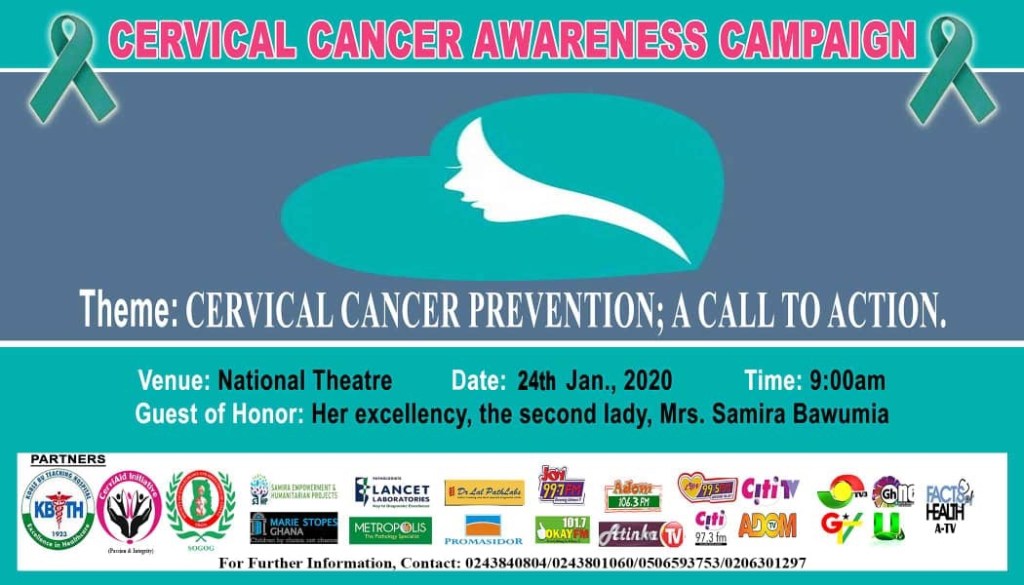
The theme for the cervical cancer awareness campaign for this year is Cervical cancer prevention; A call to action.
How can I prevent cervical cancer?
1. Kindly do regularly pap smear test to know your status once you engage in sexual activities because early detection saves life.
2. Follow up if your test results is positive. Cervical cancer is treatable if detected early.
3. Get HPV vaccine to protect you. This vaccination is recommended for preteens (11-12years or even 9years). Not recommended for those older than 26years if you have not vaccinated already. However, some adults between 27years to 45years may decide to get the HPV vaccine after consultation with the health care provider but may not have the full benefits of protection (www.cdc.gov).
4. Have protected sex (use condom) , and be faithful to your sex partner.
6. Live a good lifestyle (avoid smoking, alcohol, eat more fruits and vegetables etcs).
Conclusion.
Cervical cancer is preventable if adhered to protected sex and stay with one sex partner, and treatable if screened early to detect early for early treatment. Get screened now to know your status to save you.
 Kwasi Omaro